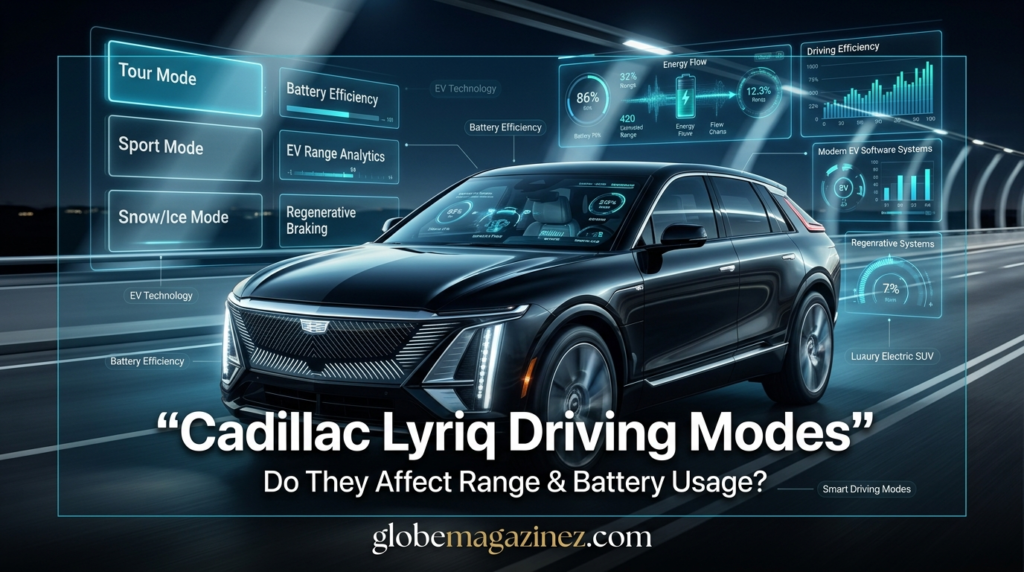
Yes, the driving modes in the Cadillac Lyriq can affect battery usage and overall driving range. Different modes adjust acceleration sensitivity, regenerative braking behavior, steering response, traction settings, and overall power delivery. While the battery size itself does not change, some modes use energy more aggressively than others, which can slightly impact real-world EV range.
Electric vehicles have changed the way people think about driving performance, efficiency, and energy management. Unlike traditional gasoline vehicles, EVs rely entirely on battery systems and intelligent software to control how power is delivered to the wheels. Because of this, driving modes play a much bigger role in electric vehicles than many people initially realize.
The Cadillac Lyriq is designed as a luxury electric SUV that combines advanced technology, premium comfort, modern software systems, and smooth electric performance. One feature many drivers notice quickly is the availability of different driving modes that change how the vehicle behaves on the road.
As more drivers switch to EVs, one common question continues appearing online:
“Do driving modes in the Cadillac Lyriq affect range or battery usage?”
The answer is yes — but understanding how it works requires looking at several factors beyond just the battery itself.
Driving modes influence:
- acceleration behavior
- motor responsiveness
- regenerative braking intensity
- traction control systems
- overall power management
At the same time, real-world EV efficiency also depends on:
- weather conditions
- driving habits
- traffic patterns
- terrain
- climate control usage
- highway speeds
This is why two drivers using the exact same driving mode may still experience very different battery performance results.
As EV technology becomes more advanced, understanding how these systems work can help drivers maximize both performance and efficiency in daily driving.
Understanding Driving Modes in Electric Vehicles
Driving modes are software-based settings that change how the vehicle responds to driver input.
In traditional gasoline vehicles, modes often adjusted:
- transmission behavior
- engine response
- suspension settings
In electric vehicles like the Cadillac Lyriq, driving modes control:
- electric motor power delivery
- acceleration curves
- regenerative braking systems
- steering feedback
- traction management
- efficiency priorities
Because EVs respond instantly to throttle input, even small software changes can noticeably alter the driving experience.
Driving modes help manufacturers balance:
- comfort
- luxury
- performance
- efficiency
- road safety
depending on driving conditions and user preference.
Why EV Driving Modes Matter More Than Gasoline Cars
Electric vehicles behave differently from gasoline-powered cars in several important ways.
EVs deliver:
- instant torque
- smooth acceleration
- quiet driving behavior
- software-controlled performance
This means software settings can dramatically influence how the vehicle feels.
For example:
- a small throttle adjustment in an EV can create immediate acceleration changes
- regenerative braking settings can alter energy recovery
- traction systems can optimize grip in slippery weather
Because the battery powers everything, efficiency management becomes much more important in EV design.
Overview of Cadillac Lyriq Driving Modes
The Cadillac Lyriq typically includes several driving modes depending on trim level and software configuration.
These modes may include:
- Tour Mode
- Sport Mode
- Snow/Ice Mode
- My Mode or customizable settings
Each mode changes the vehicle’s behavior in different ways.
Tour Mode Explained
Tour Mode is usually considered the default everyday driving mode.
This mode focuses on:
- smooth acceleration
- balanced comfort
- stable steering feel
- efficient power delivery
Tour Mode is designed for:
- commuting
- highway cruising
- urban driving
- long-distance travel
Because it balances responsiveness and efficiency, many drivers consider Tour Mode the best option for maximizing real-world range.
How Tour Mode Helps Battery Efficiency
Tour Mode helps efficiency by limiting unnecessary energy spikes.
It generally:
- smooths throttle response
- reduces aggressive acceleration
- balances motor output
- optimizes comfort systems
This creates more predictable battery usage during normal driving conditions.
For many drivers, Tour Mode provides:
- the most natural driving feel
- comfortable ride quality
- stable energy consumption
without sacrificing everyday usability.
Sport Mode Explained
Sport Mode changes the driving character significantly.
This mode usually increases:
- acceleration responsiveness
- steering sensitivity
- power delivery intensity
- overall driving excitement
Electric vehicles already accelerate quickly because of instant torque, and Sport Mode amplifies that feeling even further.
In the Cadillac Lyriq, Sport Mode can make the SUV feel much more energetic and responsive.
Does Sport Mode Use More Battery?
Yes, Sport Mode can increase battery consumption.
This happens because:
- throttle inputs become more sensitive
- drivers often accelerate harder
- power demand increases faster
- motor output becomes more aggressive
However, the mode itself is not automatically draining the battery at all times.
The actual battery impact depends heavily on driving behavior.
For example:
- gentle driving in Sport Mode may only reduce efficiency slightly
- aggressive acceleration repeatedly can reduce range much faster
This is why some drivers see minimal difference while others experience noticeable battery changes.
Why Aggressive Acceleration Uses More Energy
Acceleration requires significant electrical power.
When drivers accelerate rapidly:
- the motors demand more current
- energy consumption spikes quickly
- battery drain increases temporarily
Electric vehicles deliver power instantly, making hard acceleration especially energy-intensive.
This effect becomes more noticeable in performance-oriented driving modes.
Snow/Ice Mode Explained
Snow or Ice Mode is designed for low-traction conditions.
This mode typically:
- softens throttle response
- reduces sudden torque delivery
- improves wheel traction
- prioritizes stability systems
The goal is not maximum efficiency or performance.
Instead, Snow/Ice Mode helps maintain:
- control
- safety
- predictable handling
during slippery weather conditions.
Does Snow Mode Affect Battery Usage?
Snow Mode itself usually does not dramatically reduce range.
However, winter driving conditions often do.
Cold weather affects EV performance because:
- batteries operate less efficiently in low temperatures
- cabin heating requires extra energy
- road conditions increase rolling resistance
So while Snow Mode is focused on traction, winter conditions overall may reduce total driving range significantly.
Understanding Regenerative Braking
Regenerative braking is one of the most important efficiency features in EVs.
Instead of wasting braking energy as heat, EVs recover some energy and send it back to the battery.
The Cadillac Lyriq uses regenerative braking to:
- improve efficiency
- extend range
- reduce brake wear
- recover kinetic energy
This system is especially useful in:
- city driving
- stop-and-go traffic
- downhill driving
How Driving Modes Influence Regenerative Braking
Different driving modes may adjust:
- regenerative braking intensity
- deceleration feel
- energy recovery behavior
Some modes prioritize:
- smooth coasting
- comfort
while others increase:
- energy recovery
- stronger slowing effects
Drivers who learn to use regenerative braking effectively can often improve real-world efficiency noticeably.
One-Pedal Driving and Efficiency
Many EV drivers use one-pedal driving techniques.
This allows the vehicle to slow down significantly when the accelerator is released.
Benefits include:
- improved energy recovery
- reduced brake usage
- smoother traffic driving
- better city efficiency
The Cadillac Lyriq includes regenerative systems that support this driving style.
Highway Driving vs City Driving
Driving environment strongly affects EV range.
Why City Driving Can Be Efficient for EVs
EVs often perform very well in urban environments because:
- regenerative braking recovers energy
- lower speeds reduce aerodynamic drag
- stop-and-go traffic creates recovery opportunities
This is why many EV owners achieve strong efficiency numbers during city driving.
Why Highway Speeds Reduce Range
Highway driving usually consumes more battery power because:
- aerodynamic resistance increases rapidly
- sustained high speeds require constant energy
- regenerative braking opportunities decrease
At higher speeds, wind resistance becomes one of the biggest factors affecting efficiency.
This applies regardless of driving mode.
Climate Control and Battery Usage
Climate systems can significantly impact EV range.
Heating and cooling systems draw energy directly from the battery.
This means:
- heavy air conditioning use can reduce range
- cabin heating can consume substantial energy in winter
- battery temperature management also requires power
In very hot or cold weather, climate control usage may impact efficiency more than driving mode changes.
Cold Weather and EV Range
Cold temperatures create several efficiency challenges for EVs.
Low temperatures can:
- slow battery chemistry
- reduce energy efficiency
- increase heating demand
- affect charging performance
This is why many EV owners notice lower winter range compared to summer driving.
Hot Weather and EV Efficiency
Extreme heat can also affect battery performance.
High temperatures may increase:
- cooling system activity
- battery thermal management
- air conditioning usage
Although EVs generally handle heat well, thermal systems still require energy.
Tire Pressure and Efficiency
Tire pressure plays an important role in EV range.
Low tire pressure increases:
- rolling resistance
- energy demand
- battery consumption
Maintaining proper tire pressure helps:
- maximize efficiency
- improve handling
- reduce unnecessary battery drain
Terrain and Elevation Changes
Driving uphill consumes more energy because the vehicle must overcome gravity.
Meanwhile:
- downhill driving can recover some energy through regenerative braking
Mountain driving often creates fluctuating efficiency results depending on elevation changes.
Weight and Cargo Impact
Extra vehicle weight affects EV efficiency.
Additional passengers or cargo increase:
- acceleration energy requirements
- rolling resistance
- total battery demand
Although the effect may be moderate, heavier loads can reduce overall range.
Software Optimization in Modern EVs
Modern electric vehicles rely heavily on intelligent software systems.
The Cadillac Lyriq continuously monitors:
- battery conditions
- energy flow
- motor efficiency
- temperature management
- driving behavior
These systems help optimize performance and efficiency automatically.
Why Real-World Range Varies So Much
EV range estimates are never fixed numbers.
Real-world results vary because every driver experiences different:
- traffic patterns
- weather conditions
- road surfaces
- driving habits
- climate usage
This is why actual range often differs from official estimates.
Driving Style Matters More Than Driving Mode
Many experts agree that driving behavior affects range more than the selected mode itself.
Aggressive habits like:
- rapid acceleration
- sudden braking
- sustained high-speed driving
can reduce range quickly.
Meanwhile:
- smooth acceleration
- moderate speeds
- efficient regenerative braking use
often improve battery performance significantly.
Luxury EVs Balance Performance and Efficiency
The Cadillac Lyriq is designed as a premium luxury SUV.
This means Cadillac balances:
- smooth comfort
- powerful acceleration
- quiet driving
- advanced technology
- efficiency optimization
The goal is creating a refined EV experience rather than focusing only on maximum efficiency.
Why Drivers Use Different Modes
Different driving situations require different vehicle behavior.
Drivers may prefer:
- Tour Mode for commuting
- Sport Mode for spirited driving
- Snow Mode for winter conditions
Driving modes provide flexibility depending on:
- weather
- road conditions
- driver preference
- comfort priorities
Are Range Differences Huge Between Modes?
Usually not.
In most real-world conditions:
- Tour Mode may improve efficiency slightly
- Sport Mode may reduce efficiency moderately
- driving habits create larger differences overall
The gap is noticeable but typically not extreme during normal driving.
How EV Drivers Maximize Range
Experienced EV owners often use several techniques to improve efficiency including:
- smooth acceleration
- moderate highway speeds
- regenerative braking optimization
- proper tire maintenance
- climate control moderation
These habits usually matter more than mode selection alone.
Why EV Technology Keeps Improving
Electric vehicle software continues evolving rapidly.
Manufacturers constantly improve:
- energy management systems
- regenerative braking algorithms
- thermal efficiency
- battery optimization software
Future updates may continue improving range performance over time.
Key Factors Affecting Cadillac Lyriq Range
| Factor | Impact Level |
| Driving Mode | Moderate |
| Driving Style | Very High |
| Weather | High |
| Highway Speed | Very High |
| Regenerative Braking | Positive |
| Climate Control | Moderate to High |
| Tire Pressure | Moderate |
| Terrain | Moderate |
| Vehicle Weight | Moderate |
| Traffic Conditions | Moderate |
FAQs
Does Sport Mode reduce Cadillac Lyriq range?
Yes, aggressive acceleration and increased responsiveness can increase battery usage and reduce efficiency.
Which mode is best for daily driving?
Tour Mode is generally considered the most balanced option for comfort and efficiency.
Does regenerative braking improve EV range?
Yes, regenerative braking helps recover energy during deceleration and improves efficiency.
Is city driving better for EV efficiency?
Often yes, because regenerative braking works well in stop-and-go traffic.
Why does highway driving reduce EV range?
Higher speeds increase aerodynamic drag and require more continuous energy.
Does cold weather affect Cadillac Lyriq battery performance?
Yes, cold temperatures can reduce efficiency and increase heating energy demand.
Does climate control impact battery usage?
Yes, heating and air conditioning systems draw power directly from the battery.
Is Snow Mode designed for efficiency?
No, Snow Mode mainly focuses on traction and stability in slippery conditions.
Can smooth driving improve EV range?
Yes, gentle acceleration and braking usually improve battery efficiency significantly.
Does tire pressure affect EV range?
Yes, low tire pressure increases rolling resistance and energy consumption.
Are driving mode differences dramatic?
Usually no. Driving habits typically affect efficiency more than the selected mode alone.
Why do EVs include multiple driving modes?
Driving modes help customize performance, comfort, traction behavior, and efficiency priorities.
Conclusion
The driving modes in the Cadillac Lyriq do influence battery usage and real-world range, although the differences are usually moderate rather than dramatic. Modes like Tour prioritize balanced efficiency and comfort, while Sport Mode focuses more on responsiveness and acceleration performance.
However, factors such as driving habits, weather conditions, speed, regenerative braking use, terrain, and climate control often impact EV efficiency even more than the selected driving mode itself.
As electric vehicle technology continues improving, systems like those in the Cadillac Lyriq are becoming smarter, more adaptive, and better at balancing luxury performance with energy efficiency for modern drivers.