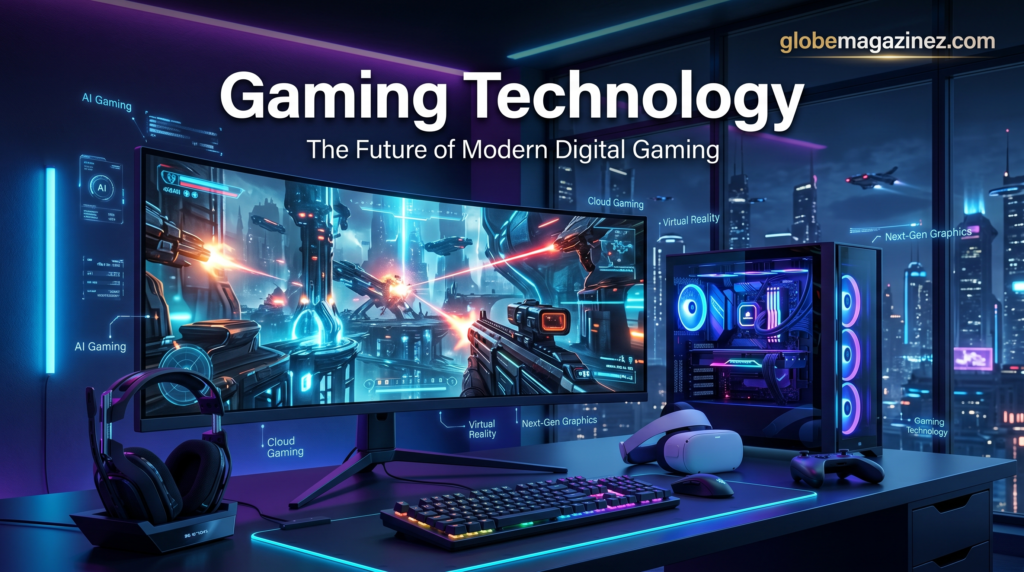
Gaming technology refers to the hardware, software, artificial intelligence, graphics systems, and digital innovations used to improve video games and gaming experiences. Modern gaming technology now includes AI-powered gameplay, cloud gaming, virtual reality, ultra-fast graphics cards, gaming laptops, esports equipment, and immersive online multiplayer systems. As gaming continues growing globally, new gaming technology is transforming not only entertainment but also digital culture, social interaction, and modern internet behavior.
Gaming technology has evolved far beyond traditional consoles and arcade machines. What was once a small entertainment niche has now become one of the fastest-growing industries in digital culture. Today, gaming influences online communities, internet trends, streaming culture, and modern social interaction.
Modern gamers now expect more than graphics alone. Performance, AI features, immersive gameplay, cloud gaming, and realistic experiences have become major parts of the industry. As technology continues improving, gaming is becoming more connected to digital lifestyle, online entertainment, and the future of interactive technology.
What Is Gaming Technology
Gaming technology refers to all the systems and innovations used to create, improve, and support video games.
This includes:
- gaming hardware
- graphics technology
- gaming software
- AI systems
- online multiplayer infrastructure
- virtual reality
- cloud gaming platforms
- gaming accessories
The purpose of gaming technology is to create faster, smoother, more realistic, and more immersive gaming experiences.
Modern gaming systems now combine powerful processors, AI-driven mechanics, advanced physics engines, and real-time graphics rendering to create experiences that feel almost cinematic.
How Gaming Technology Has Evolved
The gaming industry has changed significantly over time.
Early games focused on:
- simple controls
- pixel graphics
- offline gameplay
- limited interaction
Modern gaming technology now focuses on:
- realistic environments
- online multiplayer gaming
- AI-powered gameplay
- cloud gaming
- ultra-fast performance
- virtual reality experiences
This evolution has transformed gaming into a massive global industry connected to technology, entertainment, and internet culture.
What Is New in Gaming Technology
Modern gaming technology continues evolving rapidly because companies are constantly competing to create more immersive experiences.
Several major innovations are shaping the future of gaming right now.
Artificial Intelligence in Gaming
Artificial intelligence is becoming one of the biggest parts of modern gaming technology.
AI is now used for:
- smarter NPC behavior
- adaptive gameplay
- realistic enemy reactions
- automatic game optimization
- voice interaction systems
Some games now adjust difficulty levels automatically based on player behavior and performance.
AI is also helping developers build larger and more realistic virtual worlds faster than before.
Cloud Gaming Technology
Cloud gaming is changing how people access games.
Instead of requiring expensive hardware, cloud gaming allows players to stream games online through remote servers.
This technology offers:
- instant game access
- reduced hardware limitations
- cross-device gaming
- portable gaming experiences
As internet speeds improve, cloud gaming may continue replacing traditional download-based gaming systems.
Virtual Reality and Immersive Gaming
Virtual reality has become one of the most talked-about gaming technologies.
VR gaming allows players to experience:
- immersive environments
- motion-controlled gameplay
- realistic interaction
- 360-degree digital worlds
Modern VR systems are becoming:
- lighter
- faster
- more realistic
- easier to use
This technology is helping blur the line between digital and physical entertainment.
Advanced Gaming Hardware
Gaming hardware continues becoming more powerful every year.
Modern gaming systems now include:
- AI-powered graphics cards
- ultra-fast SSD storage
- high refresh-rate monitors
- powerful gaming laptops
- advanced cooling systems
High-end gaming technology focuses heavily on:
- performance
- speed
- visual realism
- low latency
This hardware evolution is especially important for competitive gaming and esports.
Gaming Technology Group and Industry Growth
The gaming technology industry has become one of the largest entertainment sectors in the world.
Major gaming technology groups and companies now invest heavily in:
- AI gaming systems
- graphics technology
- cloud gaming infrastructure
- esports platforms
- gaming accessories
- virtual reality development
The industry is no longer limited to gaming companies alone.
Technology brands, smartphone manufacturers, AI companies, and internet platforms are all entering the gaming market because gaming audiences continue growing globally.
Gaming Technology and Modern Human Behavior
Gaming technology is not only changing entertainment. It is also changing digital behavior.
Many people now:
- socialize through games
- attend virtual gaming events
- communicate inside gaming platforms
- build online communities
- consume gaming content daily
Gaming has become deeply connected to:
- streaming culture
- internet personalities
- social media trends
- digital identity
For younger audiences especially, gaming is often part of daily online life rather than occasional entertainment.
Gaming Technology in Esports
Esports has become one of the biggest drivers of gaming innovation.
Competitive gaming now demands:
- ultra-fast response times
- powerful gaming PCs
- low-latency internet
- high refresh-rate displays
- advanced gaming peripherals
This has pushed gaming technology companies to create more specialized products for professional and competitive players.
Modern esports arenas now resemble professional sports environments with advanced lighting, broadcasting systems, and real-time audience interaction.
Gaming Laptops and Portable Gaming
Gaming laptops have become increasingly popular because people now want performance and portability together.
Modern gaming laptops offer:
- desktop-level graphics
- advanced cooling systems
- high refresh-rate displays
- AI-assisted performance optimization
Unlike older gaming laptops, modern versions are thinner, faster, and more power-efficient.
This trend reflects a broader shift toward flexible digital lifestyles where people work, stream, and game from multiple locations.
Key Facts About Gaming Technology
| Feature | Details |
| Industry Type | Digital entertainment technology |
| Main Technologies | AI, VR, cloud gaming, graphics |
| Major Devices | PCs, consoles, gaming laptops |
| Modern Focus | Immersion and performance |
| Online Features | Multiplayer and streaming |
| Fastest Growing Area | AI-powered gaming |
| Popular Audience | Global digital users |
| Industry Impact | Entertainment and internet culture |
Why Gaming Technology Continues Growing
Gaming technology keeps growing because modern users want:
- better graphics
- faster performance
- immersive experiences
- online interaction
- realistic gameplay
Gaming is also becoming more connected to:
- content creation
- livestreaming
- AI technology
- social interaction
- digital entertainment ecosystems
This combination keeps the industry evolving rapidly.
Future of Gaming Technology
The future of gaming technology will likely focus on:
- AI-generated game worlds
- smarter NPC interaction
- realistic virtual environments
- wearable gaming devices
- advanced VR systems
- cloud-based gaming ecosystems
Some experts also believe gaming will become more integrated with:
- education
- virtual workspaces
- digital communication
- metaverse-style environments
As technology improves, gaming may become one of the most immersive forms of digital interaction.
Challenges Facing Gaming Technology
Despite rapid growth, gaming technology still faces several challenges.
These include:
- expensive hardware costs
- internet speed limitations
- online toxicity
- gaming addiction concerns
- cybersecurity risks
Companies continue working on improving accessibility, safety, and performance for global audiences.
Why Gaming Technology Matters Today
Gaming technology now influences much more than games themselves.
It affects:
- digital culture
- social interaction
- entertainment habits
- online communication
- internet trends
Many modern technologies, including AI graphics systems and virtual environments, are advancing faster because of gaming industry innovation.
Gaming has become one of the biggest drivers of modern consumer technology.
Discover smart online trends, viral topics, and helpful modern guides:
- TheLaptopAdviser Expert Gaming: Complete Gaming Guide
- NewsLikeYou com: Complete Guide to Content and Features
- MagFuseHub.com: Complete Guide to Content and Features
- Future of Mobile Browsing and Smartphone Internet Trends
- Digital Minimalism Trends Changing Online Life in 2026
- Voozon Explained: Why People Are Talking About It in 2026
FAQs
What is gaming technology?
Gaming technology includes hardware, software, AI systems, graphics engines, and digital tools used to create and improve gaming experiences.
What is new in gaming technology?
Modern gaming technology now includes AI-powered gameplay, cloud gaming, virtual reality, advanced graphics cards, and immersive multiplayer systems.
How is AI used in gaming?
AI helps improve NPC behavior, game realism, adaptive difficulty, and automated performance optimization.
What is cloud gaming?
Cloud gaming allows players to stream games online without needing powerful local hardware.
Why are gaming laptops popular?
Modern gaming laptops combine portability with high gaming performance and advanced graphics capabilities.
How does gaming technology affect society?
Gaming technology influences digital culture, online communication, streaming, entertainment, and social interaction.
Conclusion
Gaming technology has evolved into one of the most influential parts of modern digital life. From AI-powered gameplay and cloud gaming to virtual reality and esports, the industry continues pushing technology forward at a rapid pace.
As gaming becomes more connected to internet culture, online communities, and digital entertainment, its influence continues expanding beyond traditional gaming itself. Modern gamers now expect immersive experiences, fast performance, and realistic environments that feel closer to interactive digital worlds than simple games.
The future of gaming technology will likely become even more advanced as AI, virtual reality, and cloud systems continue developing. For many people, gaming is no longer just entertainment. It has become part of modern digital culture and everyday online life.