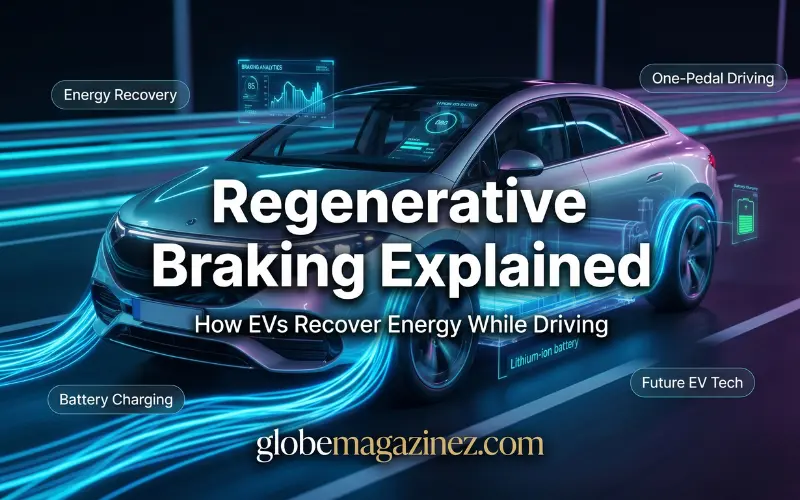
Electric vehicles are changing the future of transportation through advanced technologies that improve:
- efficiency
- energy usage
- battery performance
- driving comfort
- and sustainability
One of the most fascinating EV technologies is regenerative braking.
Many people hear the term for the first time while researching:
- Tesla vehicles
- electric cars
- hybrid technology
- battery efficiency
- or future automotive systems
But what exactly is regenerative braking?
Unlike traditional braking systems that waste energy as heat, regenerative braking allows electric vehicles to recover some of that lost energy and send it back into the battery.
This technology helps EVs:
- extend driving range
- improve efficiency
- reduce brake wear
- optimize battery usage
- and create smoother driving experiences
Regenerative braking is now one of the most important features in modern electric mobility.
Without it, EV efficiency would be significantly lower.
Today, companies like:
- Tesla
- Hyundai
- BMW
- Mercedes-Benz
- Lucid
- Rivian
- and many others
use increasingly advanced regenerative braking systems to maximize energy recovery.
This complete guide explains:
- how regenerative braking works
- why it matters
- how EVs recover energy
- Tesla regenerative braking
- hybrid braking systems
- one-pedal driving
- winter braking performance
- energy efficiency
- battery charging during braking
- future smart braking systems
- and common myths surrounding regenerative braking technology
What Is Regenerative Braking?
Regenerative braking is a system that allows electric vehicles to recover energy during slowing or braking.
Instead of wasting motion energy as heat, the vehicle converts some of that motion back into electricity.
That electricity is then sent back into the battery.
This process improves overall energy efficiency.
Traditional gasoline vehicles mostly waste braking energy through friction and heat.
Electric vehicles use regenerative braking to capture part of that otherwise lost energy.
How Traditional Brakes Work
Traditional braking systems use friction.
When drivers press the brake pedal:
- brake pads press against rotors
- friction slows the wheels
- kinetic energy converts into heat
That heat energy disappears into the environment.
No energy recovery occurs.
This system works well but wastes large amounts of usable energy.
How Regenerative Braking Works
Electric vehicles work differently.
During regenerative braking:
- the electric motor temporarily changes function
- instead of consuming electricity, it generates electricity
The motor acts like a generator.
As the vehicle slows down:
- wheel motion spins the motor
- the motor converts movement into electrical energy
- electricity flows back into the battery pack
This recovered energy helps recharge the battery while driving.
Kinetic Energy Recovery
Every moving vehicle contains kinetic energy.
Normally, braking destroys that energy through heat.
Regenerative braking captures part of this motion energy before it disappears.
The process improves vehicle efficiency because:
- less energy gets wasted
- more energy returns to the battery
- the EV uses electricity more effectively
This is one reason electric vehicles achieve high efficiency compared to gasoline vehicles.
Why Regenerative Braking Matters in EVs
Regenerative braking is critical because EV range depends heavily on efficient energy usage.
Battery energy is valuable.
Recovering energy during braking helps:
- extend range
- improve efficiency
- reduce charging frequency
- optimize battery performance
Without regenerative braking, EV batteries would drain much faster.
How Much Energy Can Regenerative Braking Recover?
Energy recovery varies depending on:
- driving conditions
- traffic
- vehicle design
- braking intensity
- battery state
- road terrain
In many situations, regenerative braking can recover a noticeable amount of energy.
Stop-and-go city driving often benefits the most because frequent slowing creates more recovery opportunities.
Highway driving usually produces less regenerative recovery because braking occurs less often.
Why EVs Feel Different When Slowing Down
Many new EV drivers immediately notice something unusual.
When they release the accelerator pedal, the car slows down automatically.
This happens because regenerative braking activates as soon as the accelerator is released.
The vehicle begins recovering energy immediately.
This creates a driving sensation very different from traditional gasoline vehicles.
What Is One-Pedal Driving?
One-pedal driving is one of the most popular regenerative braking features.
In this system:
- lifting off the accelerator automatically slows the vehicle significantly
Drivers often use the accelerator pedal for:
- speeding up
- slowing down
- traffic control
without touching the brake pedal frequently.
Tesla popularized this driving style, though many other automakers now support similar systems.
Benefits of One-Pedal Driving
One-pedal driving offers several advantages:
- smoother driving
- reduced brake wear
- less driver fatigue
- better energy recovery
- improved traffic efficiency
Many EV owners eventually prefer this driving style after adjusting to it.
Tesla and Regenerative Braking
Tesla is one of the biggest names associated with regenerative braking technology.
Tesla vehicles use highly advanced software-controlled regenerative systems designed to maximize efficiency.
Tesla regenerative braking helps:
- extend range
- improve battery optimization
- support one-pedal driving
- reduce mechanical brake usage
Tesla software continuously adjusts braking behavior based on:
- battery temperature
- driving conditions
- battery charge level
- traction conditions
Why Mechanical Brakes Still Matter
Even though regenerative braking is powerful, traditional friction brakes are still necessary.
Mechanical brakes are important for:
- emergency stopping
- rapid deceleration
- slippery conditions
- complete vehicle stopping
EVs combine both systems together intelligently.
How EVs Blend Regenerative and Traditional Brakes
Modern EVs use brake blending systems.
The vehicle automatically decides:
- how much regenerative braking to use
- when friction brakes are needed
This process happens almost instantly through advanced software.
Drivers usually do not notice the transition.
Regenerative Braking in Hybrid Cars
Hybrid vehicles also use regenerative braking.
Cars like the Toyota Prius helped popularize the technology long before fully electric vehicles became mainstream.
In hybrids:
- regenerative braking helps recharge smaller battery systems
- improves fuel efficiency
- reduces gasoline consumption
Hybrid regenerative systems are similar to EV systems but usually less aggressive.
Does Regenerative Braking Charge the Battery Fully?
No.
Regenerative braking helps recover energy, but it usually cannot fully recharge an EV battery alone.
Charging stations remain necessary.
However, regenerative braking significantly improves efficiency by recovering energy that would otherwise disappear.
Why City Driving Improves EV Efficiency
EVs often perform exceptionally well in city traffic because regenerative braking works continuously during:
- stoplights
- traffic congestion
- intersections
- low-speed driving
This helps offset energy usage.
Gasoline vehicles often become less efficient in stop-and-go traffic.
EVs can actually benefit from it.
Does Regenerative Braking Work on Highways?
Yes, but less frequently.
Highway driving usually involves:
- stable speeds
- fewer braking events
- less energy recovery opportunities
This means regenerative braking contributes less on highways compared to urban driving.
Can Regenerative Braking Increase Driving Range?
Yes.
Regenerative braking directly improves efficiency, which can help extend overall driving range.
The exact improvement varies depending on:
- traffic patterns
- terrain
- driving style
- vehicle design
Range benefits are especially noticeable during city driving.
Regenerative Braking and Battery Health
Regenerative braking itself generally does not harm battery health.
Modern battery management systems carefully control:
- charging rates
- energy flow
- thermal conditions
to protect battery longevity.
In fact, regenerative braking often supports more efficient battery usage overall.
Does Regenerative Braking Work in Winter?
Yes, but winter conditions can affect performance.
Cold batteries cannot always accept recovered energy as efficiently.
During freezing temperatures:
- regenerative braking strength may temporarily decrease
- energy recovery may become limited
- software may prioritize traction safety
Once the battery warms up, regenerative performance usually improves.
Why Slippery Roads Affect Regenerative Braking
On icy or slippery roads, excessive regenerative braking could reduce traction.
Modern EVs use intelligent traction control systems to balance:
- stability
- energy recovery
- wheel grip
- braking force
Safety remains the top priority.
Why Regenerative Braking Reduces Brake Wear
Because regenerative braking handles much of the slowing process, traditional brakes are used less frequently.
This reduces:
- brake pad wear
- rotor wear
- maintenance frequency
Many EV owners report brake systems lasting significantly longer than in gasoline vehicles.
Is Regenerative Braking Safe?
Yes.
Modern regenerative braking systems are heavily tested and integrated with advanced vehicle safety systems.
EV manufacturers continuously refine:
- braking stability
- traction control
- emergency braking response
- software optimization
to ensure safe operation.
Can Drivers Adjust Regenerative Braking Strength?
Many EVs allow drivers to customize regenerative braking intensity.
Some vehicles offer:
- low regeneration
- medium regeneration
- strong one-pedal driving modes
This allows drivers to choose the driving feel they prefer.
Why Some Drivers Love Regenerative Braking
Many EV owners eventually enjoy regenerative braking because it creates:
- smoother traffic flow
- more relaxed driving
- fewer brake pedal movements
- improved efficiency
It also feels technologically advanced compared to traditional driving.
Why Some Drivers Need Time to Adjust
New EV drivers may initially find regenerative braking unusual because:
- the car slows automatically
- accelerator behavior feels different
- one-pedal driving changes driving habits
Most drivers adapt quickly after some practice.
Future of Smart Braking Systems
Future regenerative braking systems will become even smarter through:
- artificial intelligence
- predictive traffic analysis
- autonomous driving integration
- AI route optimization
- advanced battery management
Future EVs may optimize braking automatically based on:
- traffic flow
- road conditions
- navigation data
- weather
- driving patterns
Regenerative Braking in Self-Driving Cars
Autonomous vehicles will rely heavily on regenerative braking.
Self-driving systems can optimize:
- smooth deceleration
- energy recovery timing
- traffic efficiency
- battery management
better than human drivers in many situations.
Why Regenerative Braking Supports Sustainability
Energy recovery improves overall efficiency.
Better efficiency means:
- less wasted electricity
- reduced charging demand
- lower energy consumption
- improved sustainability
This helps make EV transportation cleaner and more efficient overall.
Common Myths About Regenerative Braking
There are many misconceptions about regenerative braking.
Myth: Regenerative Braking Fully Charges EV Batteries
Reality:
It helps recover energy but cannot replace charging stations entirely.
Myth: Regenerative Braking Removes the Need for Traditional Brakes
Reality:
Mechanical brakes remain essential for safety.
Myth: Regenerative Braking Damages Batteries
Reality:
Modern EV software carefully manages energy recovery safely.
Myth: Regenerative Braking Does Not Matter Much
Reality:
It plays a major role in EV efficiency and range optimization.
Key Facts About Regenerative Braking
| Feature | Details |
| Main Purpose | Recover braking energy |
| Energy Recovery Method | Motor acts as generator |
| Main Benefit | Improved efficiency |
| Helps Extend Range | Yes |
| Works Best In | City traffic |
| Supports One-Pedal Driving | Yes |
| Reduces Brake Wear | Yes |
| Winter Impact | Temporary reduction possible |
Explore More EV & Future Technology Guides
FAQs
What is regenerative braking?
Regenerative braking recovers energy during slowing and sends it back into the battery.
How does regenerative braking work?
The electric motor temporarily acts like a generator during braking.
Does regenerative braking increase EV range?
Yes, it improves energy efficiency and can extend driving range.
Is regenerative braking available in all EVs?
Most modern EVs and hybrids use some form of regenerative braking.
What is one-pedal driving?
One-pedal driving allows drivers to slow the car mainly by releasing the accelerator.
Does regenerative braking replace normal brakes?
No. Mechanical brakes are still required for safety and emergency stopping.
Can regenerative braking fully charge the battery?
No. It only recovers part of lost energy.
Does regenerative braking work in winter?
Yes, though cold temperatures may temporarily reduce efficiency.
Why do EV brakes last longer?
Because regenerative braking reduces mechanical brake usage.
Is regenerative braking safe?
Yes. Modern systems are carefully controlled by advanced software.
Can drivers adjust regenerative braking strength?
Many EVs allow adjustable regeneration settings.
Why is regenerative braking important?
It improves EV efficiency, reduces waste, and supports longer driving range.
Conclusion
Regenerative braking is one of the most important technologies powering the electric vehicle revolution. By recovering energy that would normally disappear as heat, EVs become more efficient, smarter, and more sustainable.
This technology helps:
- extend battery range
- reduce brake wear
- improve driving comfort
- optimize energy usage
- and support future intelligent transportation systems
As EV technology continues evolving through:
- AI optimization
- smarter software
- autonomous driving
- advanced battery systems
- and future mobility innovations
regenerative braking will become even more advanced and efficient.
The future of driving is not only electric — it is intelligent energy recovery.