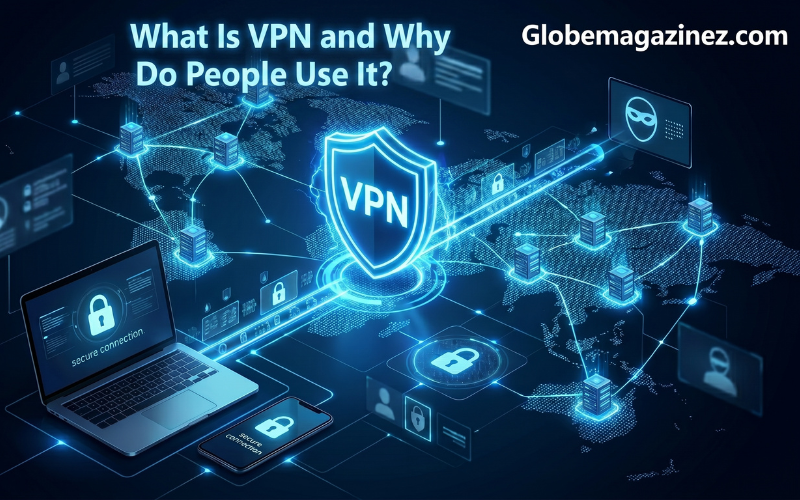
A VPN, or Virtual Private Network, is a technology that helps users protect their online privacy and secure their internet connection. It hides a user’s IP address, encrypts internet traffic, and allows safer browsing on public or private networks.
Online privacy has become one of the biggest concerns in today’s digital world. Millions of people use the internet daily for banking, shopping, social media, streaming, remote work, and communication. However, many users do not realize that their online activity can sometimes be tracked by hackers, advertisers, internet providers, or cybercriminals.
This is one of the main reasons why VPN services have become extremely popular in recent years. A VPN helps users create a more secure and private internet connection by encrypting their online data and hiding their identity online.
From remote workers and businesses to students and everyday internet users, VPN technology is now widely used across the world. In this guide, we will explain what a VPN is, how VPN technology works, its benefits and disadvantages, common uses, security concerns, and whether VPN services are truly safe.
What Is a VPN?
A VPN stands for Virtual Private Network.
It is a cybersecurity technology that creates a secure connection between a user’s device and the internet. A VPN helps protect online privacy by hiding the user’s real IP address and encrypting internet traffic.
Normally, when people browse the internet, their online activity may be visible to:
- internet service providers
- public Wi-Fi networks
- websites
- advertisers
- hackers
A VPN reduces these risks by routing internet traffic through secure servers located in different regions or countries.
This makes browsing more private and secure.
How Does a VPN Work?
Many people use VPN services without fully understanding how the system works.
When a VPN is activated:
- The user connects to a VPN server.
- Internet traffic becomes encrypted.
- The VPN hides the user’s original IP address.
- Websites see the VPN server location instead of the real location.
- Data becomes harder for hackers or trackers to monitor.
For example, if someone connects to a VPN server in the United Kingdom, websites may think the user is browsing from the UK instead of their actual location.
VPN encryption also helps protect sensitive data, especially on public Wi-Fi networks.
Why Do People Use VPNs?
VPN usage has increased rapidly because internet privacy and cybersecurity concerns continue growing worldwide.
People use VPN services for many different reasons.
Online Privacy
One of the biggest reasons people use VPNs is online privacy.
VPNs help reduce tracking by:
- advertisers
- websites
- internet providers
- third-party trackers
This helps users browse more privately.
Public Wi-Fi Protection
Public Wi-Fi networks in airports, cafes, hotels, and shopping malls can sometimes be unsafe.
Hackers may attempt to steal information from unsecured networks.
VPN encryption helps improve security while using public internet connections.
Remote Work Security
Businesses often use VPN services to protect company data during remote work.
Employees can securely access work systems and company files from different locations.
Access to Global Content
Some users use VPNs to access websites or online services that may be limited in certain regions.
VPN servers in different countries can help users access global content more easily.
Avoiding Data Tracking
Many websites collect browsing data for advertising purposes.
VPNs help reduce some forms of online tracking by masking IP addresses.
Types of VPNs
There are different types of VPN technologies designed for different needs.
Remote Access VPN
This is the most common VPN type used by individual users.
It allows users to connect securely to the internet from remote locations.
Site-to-Site VPN
Businesses use site-to-site VPNs to connect multiple office locations securely.
This helps organizations share data safely between branches.
Mobile VPN
Mobile VPNs are designed for smartphones and tablets.
They help protect mobile internet traffic during movement between networks.
Benefits of VPN Services
VPN technology offers many advantages for internet users.
Better Online Privacy
VPNs hide the user’s real IP address and encrypt internet traffic.
This improves online privacy and reduces tracking.
Improved Security
Encryption helps protect personal information from cybercriminals.
This is especially useful on public Wi-Fi networks.
Safer Remote Work
Businesses use VPNs to improve cybersecurity during remote work operations.
Employees can securely access company systems online.
Protection Against Hackers
Hackers often target unsecured internet connections.
VPN encryption makes it more difficult to intercept sensitive information.
More Secure Browsing
VPN services help create a safer browsing environment by protecting online data.
Disadvantages of VPNs
Although VPNs provide many benefits, they also have some disadvantages.
Slower Internet Speed
Encryption and server routing can sometimes reduce internet speed.
This depends on the VPN provider and server quality.
Subscription Costs
High-quality VPN services usually require monthly or yearly payments.
Free VPNs may offer limited features.
Not Complete Anonymity
VPNs improve privacy, but they do not make users completely anonymous online.
Some tracking methods may still work.
Poor-Quality VPN Risks
Some free VPN services may collect user data or display excessive ads.
Choosing a trusted VPN provider is important.
Are Free VPNs Safe?
Many users search for free VPN services because they want online privacy without paying subscription fees.
However, not all free VPNs are safe.
Some free VPN providers may:
- track user activity
- show intrusive ads
- limit security features
- sell browsing data
Trusted paid VPN services usually provide:
- stronger encryption
- better security
- faster speeds
- improved privacy protection
Users should always research VPN providers carefully before installing them.
Is VPN Legal?
VPN usage is legal in many countries.
Businesses, students, travelers, and remote workers commonly use VPN services for security and privacy purposes.
However, VPN laws can vary depending on local regulations.
Users should always follow the laws of their country while using VPN services.
VPN and Cybersecurity
VPN technology plays an important role in modern cybersecurity.
Cyber threats continue increasing worldwide, including:
- phishing attacks
- identity theft
- malware
- data breaches
- online scams
VPN encryption helps reduce certain online risks by securing internet traffic.
However, VPNs should not replace other security practices.
Users should still:
- use strong passwords
- update software regularly
- avoid suspicious links
- enable two-factor authentication
Cybersecurity works best when multiple protection methods are combined together.
Common Myths About VPNs
There are many misunderstandings about VPN technology.
VPNs Make Users Invisible
VPNs improve privacy but do not make users completely invisible online.
All VPNs Are Safe
Not every VPN provider offers strong privacy protection.
Users should choose trusted services carefully.
VPNs Only Help Hackers
Many normal internet users, businesses, and professionals use VPNs for legal security purposes.
VPNs Fully Stop Viruses
VPNs help with privacy and encryption, but antivirus protection is still important.
Who Uses VPNs?
VPN services are used by many different people worldwide.
Students
Students may use VPNs for safer browsing and online privacy.
Businesses
Companies use VPNs for remote work security and data protection.
Travelers
Travelers often use VPNs on hotel or airport Wi-Fi networks.
Remote Workers
Remote employees use VPNs to securely access company systems online.
Everyday Internet Users
Many people use VPNs simply to improve privacy and internet security.
Future of VPN Technology
The demand for VPN services is expected to continue growing in the future.
As cybersecurity threats increase, more users are becoming concerned about online privacy and digital security.
Future VPN technology may include:
- faster encryption
- improved mobile security
- AI-powered threat detection
- stronger privacy systems
Businesses and individuals are likely to continue using VPNs as digital security becomes more important worldwide.
Discover fresh AI, gaming, and online culture discussions.
- What Is Cloud Storage and How Does It Work in 2026?
- R6 Marketplace: Why Rainbow Six Siege Players Use It
- Pinterest Unblocked: Why People Search It and What It Means
- Employee Engagement Ideas: for a Better Workplace Culture
- SparkPressFusion com: What Is It and Why It’s Trending
- PlayMyWorld Latest News: New Gaming Updates and Trends
- BacktoFrontShow Pricing: Plans, Features, and What to Know
FAQs
What does VPN stand for?
VPN stands for Virtual Private Network.
What is a VPN used for?
VPNs are used for online privacy, internet security, and safer browsing.
Is VPN safe to use?
Trusted VPN services are generally considered safe when used properly.
Can VPN hide my location?
VPNs can hide a user’s IP address and display the location of the VPN server.
Do VPNs slow internet speed?
Some VPNs may slightly reduce internet speed because of encryption.
Are free VPNs good?
Some free VPNs are limited or less secure than paid services.
Is VPN legal?
VPNs are legal in many countries, but laws vary by region.
Can VPN stop hackers?
VPN encryption improves security but should be combined with other cybersecurity practices.
Do businesses use VPNs?
Yes, many businesses use VPNs for remote work and secure communication.
Why are VPNs becoming popular?
VPNs are becoming popular because people want better online privacy and cybersecurity.
Conclusion
VPN technology has become an important part of modern internet security and online privacy.
From remote workers and businesses to students and everyday users, millions of people now rely on VPN services to improve digital safety and protect personal information online.
Although VPNs have some disadvantages, they remain one of the most useful cybersecurity tools available today.
As online threats continue increasing, understanding how VPNs work can help users make smarter decisions about internet privacy and digital security.